
LEADING
IN THE AGE
OF UNCERTAINTY
The Curiosity Advantage
Agility isn’t optional. Heather explains why effective leaders embrace learning and unlearning, and how to help teams regulate emotions and stay grounded when everything feels unstable.
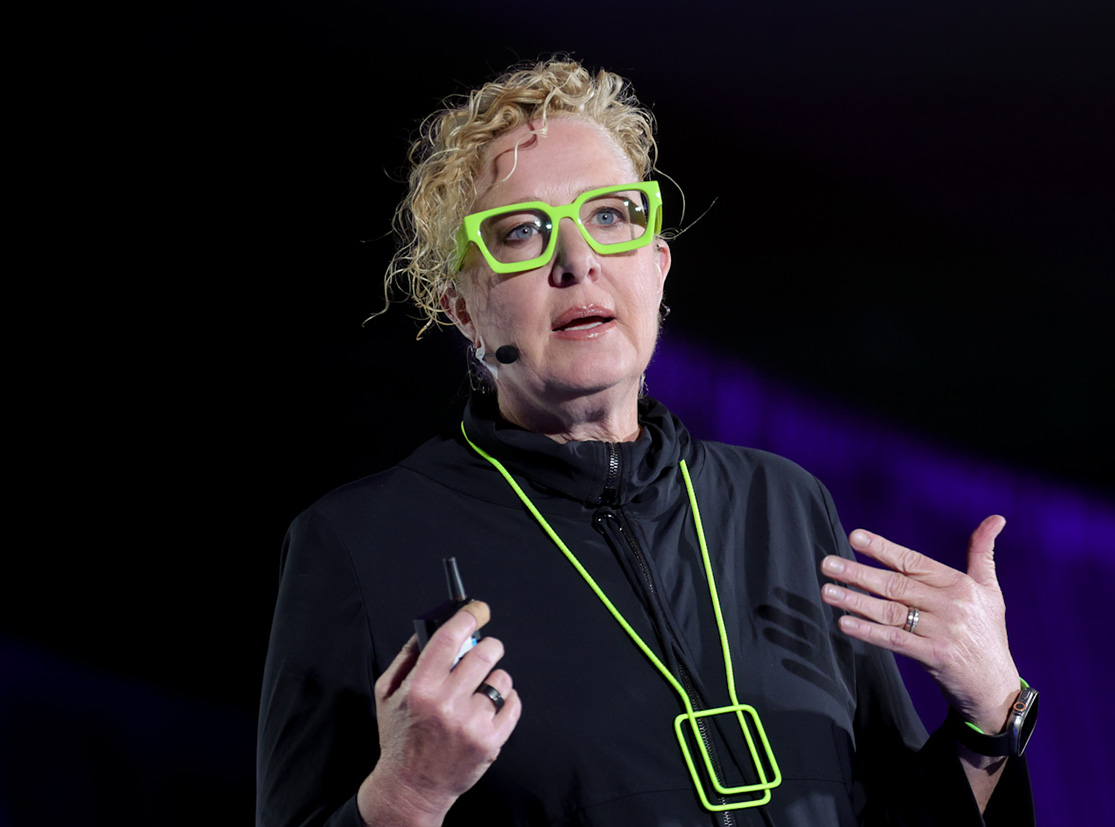
Remember when being a leader meant having all the answers? Today's most successful leaders are
ASKING BETTER
QUESTIONS.
In a world of economic volatility, AI advancement, cybersecurity challenges, and employee mental wellbeing responsibility, leadership has evolved beyond simple command-control tactics to drive productivity.
Today's exceptional leaders acknowledge complexity as a reality and leverage curiosity over unrealistic certainty, asking better questions amid constant change.
In this talk, Heather reveals how forward-thinking leaders succeed by unlocking their teams' natural capacity to adapt and innovate.
You'll discover practical frameworks to transform challenges into opportunities and evidence-based strategies replacing outdated leadership models. Through compelling research and real-world examples, learn how empowering teams, nurturing curiosity, building trust, and harnessing collective intelligence creates both agile organizations and fulfilled teams that thrive amid change.


FISH
ESSENTIAL CONTEXT
David Foster Wallace tells a story of two fish who are swimming along when an older fish swims by and asks, “Hey, how's the water?”
One fish turns to the other and says, “What the heck is water?”
Uncertainty is the water in which we've always swum. But our reliance on technology and the past convinces us we should be able to predict what comes next. David’s fish story is an excellent reminder that our job isn’t to eliminate uncertainty. That’s impossible. It's to lead through it.

WAVES
ORIENTATION
We're not dealing with one wave of change.
We're in the middle of three happening at the same time, each feeding into the next: a new human era, a new technology revolution, and a new economic paradigm.
Each one requires a shift in how we think, how we decide, and how we operate.
What Heather wants audiences to sit with is not only what's changing, but the reality that change is not episodic but normative. Change is now a normative state.

BICYCLE
UNLEARNING
Destin Sandlin is an engineer who rigged up a bike so that, when you turn the handlebars to the right, the front wheel turns left. Turn left, and the wheel goes right.
It took Destin eight months to learn how to ride the backwards bicycle. Because, under pressure, his brain kept reverting back to what it already knew.
Destin’s bicycle story reminds us that the greatest challenges ahead of us are not necessarily learning but the harder act of unlearning—which, in many cases, means rewiring our brains.


READY TO SOLVE TOMORROW’S
PROBLEMS, TODAY?